


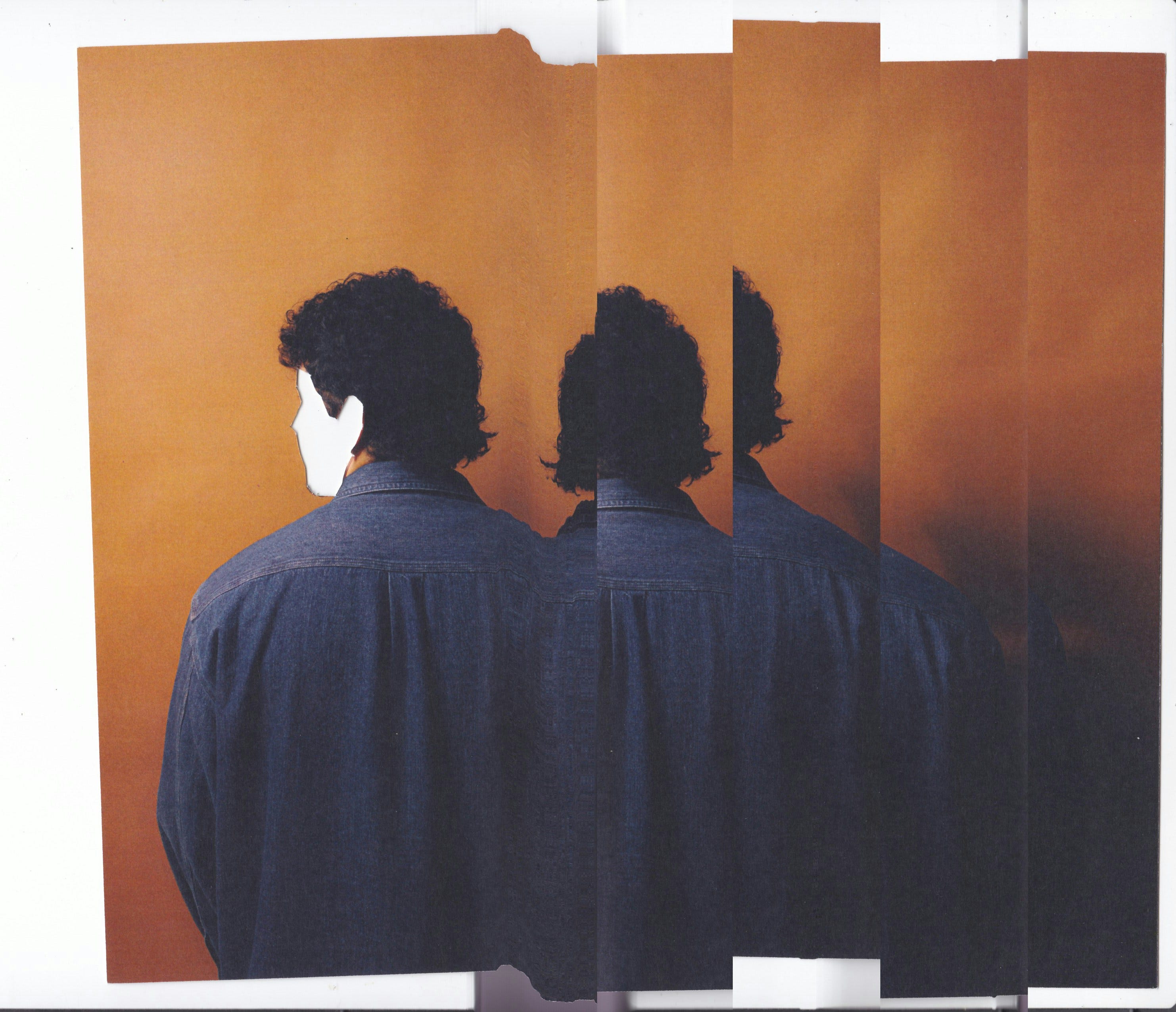
Recently, I had a dream in which I stood in a great castle, ancient and sprawling, belonging to a noble family whose daughter I was courting. A feast was being served in celebration of the daughter, and every room was filled with wealthy people milling about with elegant plates of rich food in their hands. Everyone knew who I was on account of the daughter, who had let it be known that we were dating, and on account of my family name as well, which, while not quite as elite as the daughter’s, was still respected among the noble class. As I made the rounds from chamber to hall to parlor to den, playing my role as Adoring Suitor, one guest commented how my recently greying hair made me look the spitting image of my father, God rest his soul. A bit later, in another room, a woman asked me to play a song for the guests, for there was a grand piano there, which in the dream I knew how to play. In response I said to her, “There’s a song my sister would love for me to play for you,” and I promptly set off to find the sheet music so I could play it. As I searched the castle for the song, I pondered the comment about looking like my father, and my automatic choice to play a song my sister preferred, and a nagging question troubled my mind: “What is mine?”
There’s more to the dream I’ll tell you in a moment, but I want to pause here to confess this to you: That question has haunted me all of my life.
“What is mine?”
On the face of it, a question like this sounds a bit navel gazey. It falls along the lines of What makes me special? What sets me apart? What’s my unique gift? What do I have that’s mine alone? Admittedly, these are the classic angsty ramblings of the Enneagram Type 41, of which I am one, and we are quite (in)famous for our unfortunate tendency to make everything about ourselves.
But what is often improperly judged as the Type 4’s obsession with their own drama is actually, in truth, our desperate search to find something real and grounding in the chasmic void where a solid self ought to be.
For we Type 4s dissolve into others in ways that cause us to go invisible. We are
MISCIBLE:
(adj) capable of being dissolved into something else to become a solution.
Our empathic capacities are dangerously high.2 When we listen, we do not do so as a distant observer. We jump in with you, right in the heart of things where the pain cuts the deepest. We identify with you. We feel with you. We become a solution for you. What we are apart from you dissolves away, at least for a time. We become miscible, and that makes us missable: unseen by others except as a mirror of themselves, and invisible to ourselves as well.
This empathic reaction is often automatic for us. If all the souls in creation had bluetooth speakers blasting Spotify playlists unique to each heart, then we Type 4s would be those in the mix blessed (or cursed) with exceptionally good ears. We cannot help but hear the music other souls are playing, and too often the chaos of all the music blaring around us drowns out our capacity to hear our own song. We can literally lose ourselves in the crowd.
Others often find our empathy magical, and tell us as much, but though we may coyly smile and nod when they do, we actually know better: Our empathy is not magic; it’s a survival strategy, an essential skill forged in the furnace of the dysfunctional and trauma-plagued homes in which most of us were raised.
THE MONKEY ON MY BACK
More often than one might expect, I think of studies I have read about young monkeys whose mothers abandon them, or are for other reasons beyond their control deprived of physical touch in their early development.3 The absence of nurture or any common gesture of belonging cripples them. They become paranoid and withdrawn, unable to socialize with others. Having never been touched, they find touch terrifying, so flee from the love and connection they need most. In some cases, this neurosis worsens until at last they disappear into themselves and become catatonic, their eyes glazed and empty, seemingly waiting only to die.
I think of those monkeys because I have for much of my life thought of myself as one of them, a sort of human analog of their fate.
It’s not that my mother never touched me as a boy: she did. But the touch she gave me was not the good kind.4 She touched me as one who takes, as one who uses, as one who exerts dominance and control. My father offered no protection from this, as he was largely absent from my life, and was, as far as I could tell, mostly annoyed that I was in his. I spent every day of my youth honing my empathic skills to read the nuance in both of their moods in an attempt to navigate their dysfunctions, to deflect their threats, and to avoid pain where I could.
My empathy served me well. I survived. But not without cost. And I never felt safe.
The relentless threat of abuse and the constant grief of abandonment drowned out my own voice so completely I not only lost all sense of who I was as a person, I lost any sense of being a person at all. I remember as a boy feeling altogether invisible, vaporous, like a mist or a spirit that lacked tangible substance in the world. My only solidity came as a function of whatever my parents wanted from me in the moment. When they had no use for me, then I was nothing at all, meant to be silent and out of the way.
Being so hyper focused on carefully sensing everyone else, I lost all sense of myself in those early years. This carried on into young adulthood, where I was unable to discern what I wanted, what I liked, what made me laugh, what made me cry, what I longed for or was passionate about, what I loved, who I loved—for all such questions were contingent on the ones that come before them, which for me were still unanswered:
Am I real? Am I here? Am I visible? Can you see me?
To hide my shame at not knowing myself, I lied continually to impress. I donned endless masks in endless attempts to fit in. But mostly, I hid. Invisibility, I learned, is less painful when you choose it before others can thrust it upon you. So I became the monkey in the corner, reclusive, numb, my eyes glazed over, neurotically obsessing over why I couldn’t figure myself out.
Much of my life since then has been about trying to prove to myself that I am actually here, that I am actually real, that I have a right to be here, and that I have something meaningful to offer. I’ve done this primarily by seeking the answers to the questions I never found in my youth:
Who am I?
What do I want?
Who do I love?
Where do I belong?
What is my gift?
I spent decades of effort, and no small portion of my wealth, painstakingly pickaxing my way into the shadowy lair where these questions hid, the cave where Grendel’s mother waited, guarding the elusive treasure of the answers I sought. Some might have thought me self-obsessed, but the irony is I never sought these revelations out of pride or vainglory. I have only ever wanted to find the answers to these questions so I could finally get out of my own way and just get on with the business of actually living an honest, meaningful life.
Back to the dream: On the way to find the music my sister would have me play, I came upon the daughter entertaining a circle of guests. Pulling me aside, she whispered she wanted a moment to discuss something with me. We found a large room with many elegant tables filled with people feasting, and sat together at one that wasn’t occupied. She brought up the subject of a bottle of aged Scotch I had gifted to her the evening before in the presence of several of our mutual friends. We all enjoyed the Scotch together as a group, and I remembered feeling proud of creating for her such a special time of delight and bonding.
But, she pointed out—kindly, yet with disappointment in her voice—that the Scotch had not been mine to give. It belonged to her family, she said, and it was very expensive. She knew I had found it in a butler’s pantry somewhere in the castle, and appropriated it for my own purpose. What she said was true. I had assumed the family wouldn’t notice the absence of the Scotch. The bottle was coated in dust when I found it, so obviously hadn’t been touched in some time, and there were many bottles just like it on the shelf—not to mention the fact that the family was very wealthy and could have bought a thousand bottles without a care. As I tried to explain both my reasoning and my motivations for taking the Scotch and offering it to her as if it were my gift to give, I found my own arguments shallow and immature. I wanted her to like me, and to feel good about having me around, so I simply ignored the poor ethics of taking the family’s liquor to accomplish that goal.
THE MASKS ON MY FACE
How many times have you offered people exactly what you believed they wanted from you, only to find your efforts unappreciated or rejected—or worse, completely ignored?
Over many years of awkward struggle, I pretzeled my soul into a thousand contortions, donned innumerable suffocating masks, and endured the cloying restrictions of ill-fitting costumes I was never meant to wear—all to become what I thought other people required in order for me to be seen, to be respected, and to be loved.
But none of it ever really worked for me.
For most of that time, I felt tortured by this lack of success. What was I doing wrong? I took courses. Hired gurus. Read an embarrassing number of books on branding, charisma, communication, and influence. I figured if I could just find the right approach, the right tool, the right something, I could break through, build a thriving platform or network or tribe or whatever, and make my life sing.
Looking back on it now, I’m so very grateful that none of it worked.
Can you imagine the tragedy if it had? I’d be well and truly trapped by now—fully convinced that the only way I’ll ever be seen or respected or successful or loved is by pretending to be something I’m not.
But of course, I wouldn’t really be seen, would I? Not the real me, I mean. I wouldn’t really be loved, or even respected—not because my offering wasn’t good, but because it wouldn’t be authentically mine. It would be like the bottle of Scotch I didn’t own—something I borrowed, or faked, or copied, or manufactured, or outright stole from some outside source and pasted over my soul because the performance program or the algorithm or the department head or the guru or the AI advisor or the hustle culture told me that’s who I had to be if I wanted to get noticed, to get praised, to get promoted.
To get love.
But my attempts at such fakery have all miserably failed.
Thank God. Thank God.
As it turns out, sincerity and passion can indeed be faked, expertly so, and the masses are regularly bamboozled into becoming true believers in all manner of snake oil salesmen. Just ask any big name Social Media Influencer. Or D.C. politician. Or rock star preacher. Or edgy political podcast host. Or top-ranked commentator on any so-called “news” network. Or cult leader.
It’s just that I happen to suck at that particular kind of fakery.5
Fortunately, on the long winding path of my own recovery, I have come upon a much better way to get the love and belonging and respect my heart so desperately craves—a way of being and moving though the world that doesn’t require me to wear any masks at all, or to splinter my soul into shards and hide slices of the real me away from public view.
Quite the opposite, actually.
THE S.H.E.R.P.A. IN MY SOUL
“Don’t bend; don’t water it down; don’t try to make it logical; don’t edit your own soul according to the fashion. Rather, follow your most intense obsessions mercilessly.”—Franz Kafka
Some years ago, I started following weird people on YouTube. Well, not weird people. They were perfectly normal people (mostly). I mean they were weird people for me to follow, because their YouTube channels focused on topics that held little to no interest for me at all. Yet I could not stop watching them.
Take, for example, one Chris Stanley at @CosplayChris. Chris is an affable Aussie bloke who is way big into cosplay—the playful art and craft of dressing up as characters from fictional movies and video games, and taking them out for a spin in public settings to show them off. Through his videos, Chris shares his immense passion for all aspects of this world, from designing and creating costumes and props, embodying the essence of the characters, and cosplaying them on the road in conferences or other venues. Mind you, I have never done cosplay, have zero interest in doing cosplay, and as far as I know have never attended an event where cosplayers were present. But I love watching Chris share his passion with the world.
More recently, I’ve fallen in with Graham Scheper, who makes videos about the Old English language—no, I kid thee not—even though I myself do not speak Old English, have only the mildest curiosity about some origins of some English words, and have no desire to learn Old English myself. But Graham’s deep love for that ancient tongue, and the sense of genuine care and aliveness he brings to every video draws me in and makes me want to watch and learn more.
I could keep going and gush about Barbs’s geography videos at @GeographyNow, or Dami Lee’s fun explorations of architecture and design at @DamiLee, but you get the idea. At some point, I realized I was being drawn to these people not because of their content but because of their authentic passion, because of the genuine aliveness they transmit through the screen, because of the unique way each of their faces and bodies light up as they share what really, truly matters to them.
There are lots of ways to hide the real you and project a convincing persona of sincerity and enthusiasm out to the world. But genuine Soul Hunger, Embodied Resonance, Passionate Aliveness—these cannot be faked. Such expressions of life cannot be forced or manufactured by the will. I believe the reason they can’t be faked is because they don’t originate in us—that is, from within our being. Like Beauty, like Truth, the light of Pure Life comes to us from Elsewhere. It does not shine from us; it shines through us. A lighthouse beacon may be dazzling and bright, piercing all the way across the bay. But the electricity that powers it does not come from the lighthouse.
Aliveness is a through state. It is not generated from the self. The heart plugs into it, and surrenders to it. It is not created but channeled—not that we channel it; rather, it channels itself through us. In the arts, we call it the Muse; in most other arenas, we call it the “flow state.” We are carried along by the Aliveness flowing through us, silently drawn, as Rumi said, “by the stronger pull of what you really love.” We experience this aliveness as a deep hunger in the soul, a pull toward some end we cannot quite see. Our bodies literally vibrate in resonance with this desire. All of our neurons fire in its presence; we are fully awake. Everything in us feels in one sense set ablaze, and in another, swept up in a flood, and our only wish is to fall in, and let our souls be fully consumed. As we attune our lives to the presence and flow of this Aliveness, it becomes like a Sherpa, our personal guide on the “pathless path,” an embodied resonance in our hearts pulling us in the direction we need to go.
Soul Hunger + Embodied Resonance + Passionate Aliveness = S.H.E.R.P.A.
The experience of SHERPA can be connected to anything; it does not matter how obscure or niche it may seem. So long as it’s genuine, it will draw others to it like moths to flame. Some who are drawn will share the same SHERPA, but others will come simply because the human soul is naturally and irresistibly drawn to the visceral experience of genuine aliveness, wherever and however it comes into the world.
Life attracts life.
We often experience the world as a very dark place. Our hearts feel separate and alone much of the time. Some part of us senses that we have been severed from the Great Source of life, perhaps at some point long ago, in a time before memory. Yet we carry the imprint and echo of that sweet union we once knew. Perhaps it is because of this “memory of Eden”6 that our hearts cannot help but be drawn toward any manifestation of SHERPA in the world. It is the home to which we all long to return, and it matters not which door we use to gain entry.
Unlike the manipulative stratagems of branding and messaging and careful optics of crafting charismatic personas, true SHERPA is not something we can manufacture. It isn’t something that originates in us at all. It is something we discover through our relationship with the universe around us, and upon discovering, surrender ourselves to whole and complete, without reservation, holding nothing back. This journey takes time and patience and a fair bit of courage, as I am still learning all too well. But I believe it is only through this path of surrender that we can throw wide the floodgates of the pure, raw aliveness that longs to flow uniquely through each of our lives.
As for my own SHERPA, I can tell you this:
I am in love with what the old Celts called Thin Places—the sacred geographies and intimate contexts where the veil between the spiritual and natural realm grows thin and permeable. I’m in love with the Beauty and the Magic that inhabit such spaces, and the visceral, palpable power of the Divine that flows across its ephemeral thresholds to open blind eyes, to shatter binding paradigms, to restore broken hearts, and to set the whole world free.
I believe everything transformative or meaningful that happens in our lives happens in Thin Places, and so I apply all my passion and skill to draw them into everything I write, whether it’s a novel or a poem, or an essay like this. I consciously cultivate what I call “thin place encounters” in every coaching session I facilitate, in every course I teach, and through every experience I create in the retreats I lead.
I am thinking of you right now, dear reader, as I write this. I picture the invisible line between us…the Thin Place bridge between your soul and mine that stretches across time as we each reflect on these words on the page: me as I write them, and you as you read them. I wonder about the particular vulnerable aliveness that wants to flow wild and free through you—do you know what it is? I wonder, too, about the vulnerable aliveness that wants to flow wild and free through me. And I wonder what might happen if you and I simply agreed, right here on this little bridge across time and space, to let our aliveness reveal itself to us, and when it does, to surrender to it whole and complete…to follow our SHERPA, and hold nothing back.
“We can live any way we want.
People take vows of poverty, chastity, and obedience
—even of silence—
by choice.
The thing is to stalk your calling in a certain skilled and supple way,
to locate the most tender and live spot and plug into that pulse…
I think it would be well, and proper, and obedient, and pure,
to grasp your one necessity and not let it go,
to dangle from it limp wherever it takes you.”
— Annie Dillard

Note: Paid subscribers also receive a personal audio recording of me reading this entry. If you’d like to join the team supporting my writing, you can do so by clicking the button below. I really appreciate it!
